

August 2025 Rainy Season Update
- Liang's Green Earth Foundation

- Sep 28, 2025
- 3 min read
Green Earth Foundation Reaches One Million Trees in East Africa
We are proud to share an exciting milestone: after two years of dedication, Green Earth Foundation (GEF) has officially planted one million trees in our East African reforestation sites as of August 26. This achievement is a powerful symbol of what sustained effort, strong local partnerships, and a shared vision for a greener planet can accomplish.

Beyond Planting: Building Sustainable Landscapes
The work doesn’t end with planting. Our teams continue to maintain and strengthen the surrounding lands, ensuring that the new forests thrive for generations to come. Current activities include:
Excavating water channels to capture and store precious rainfall during the wet season.
Planting sand-binding species around young trees to protect the soil and stabilize the land.
Soil enrichment projects to prepare for future expansions and improve agricultural resilience.
These steps are critical for turning tree planting into long-term ecosystem restoration.

Native Trees with Everyday Benefits
Our 2025 planting program features a diverse mix of native African species that serve both ecological and community needs. Among them are: Acacia mellifera, Acacia nilotica, Acacia senegal, Acacia seyal, Adansonia digitata, Afzelia africana, Azadirachta indica, Balabites indica, Bombax costatum, Detarium mucricarpum, Guiera senegalensis, Piliostigma reticulatum, Pterocarpus erinaceus, Saba senegalensis, Sclerocarya birrea, Tamarindus indica, and Ziziphus mauritiana.





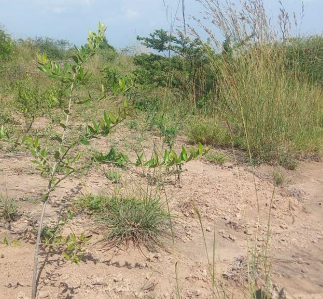
Here’s how some of these species play an important role in daily life:
Fodder & Construction: Acacia mellifera, Guiera senegalensis, and Piliostigma reticulatum are widely used as animal fodder during dry seasons. Their wood can be repurposed for fencing, roofing, and small-scale construction, directly supporting rural households.
Economic Value: Acacia seyal is one of the world’s sources of gum arabic, a product used globally in soft drinks, confectionery, and even pharmaceuticals. Harvesting gum arabic provides sustainable income streams for local families.
Food Security: Several species are also fruit-bearing trees. Saba senegalensis produces tangy fruits enjoyed fresh or in juices; Sclerocarya birrea (the marula tree) yields fruit rich in vitamin C, also used in oils and traditional beverages; Tamarindus indica offers tart pods used in cooking and medicine; and Ziziphus mauritiana provides small sweet fruits that can be eaten fresh or dried. These trees improve both nutrition and household incomes.
Medicinal & Cosmetic Uses: Azadirachta indica (Neem tree) is renowned for its antibacterial properties. Its oil is widely used in skincare, hair products, and natural remedies. Neem leaves and bark are also applied in traditional medicine for treating fever, infections, and crop protection.
Cultural & Ecological Icons: Trees like the Baobab (Adansonia digitata) are central to African landscapes and culture. Baobab fruit pulp is nutrient-rich, while its trunk stores water, helping both people and wildlife during dry seasons.
By planting species that are not only native but also beneficial, we ensure that reforestation contributes directly to biodiversity, food security, and economic development.

Looking Ahead
Reaching one million trees is a proud milestone—but it is only the beginning. The maintenance, protection, and thoughtful selection of species set the stage for long-term success. With every seedling, we are not just restoring ecosystems—we are supporting communities, strengthening resilience, and creating opportunities for sustainable growth.


Comments